
I don’t know about you, but lately, it feels like every conversation in the finance world has an added layer of paranoia, right? We used to worry about market volatility, credit risk, maybe a bad audit finding. Now? Now we’re worrying about ransomware, phishing, and having our entire client list broadcast on the dark web. It’s a wild, frankly scary, time to be a finance or accounting professional.
The old days of balancing paper ledgers and locking up a filing cabinet were so much simpler. Today, our data—our most valuable asset—is flowing through the cloud, across continents, and being processed by AI algorithms. This incredible Digital Transformation in Finance Security has made everything faster and more efficient, but it’s also painted a huge bullseye on the back of every financial institution and accounting firm.
That’s why the trifecta of Cybersecurity in Accounting and Finance, aggressive Risk Management for Finance Professionals, and suffocating regulatory compliance is the single most important topic right now. If you’re studying for your Diploma in Accounting and Finance—or even if you’re a seasoned CFO—your career depends on mastering this digital defense game. For those of us particularly involved in Accounting and Finance in Spain, the European Union’s regulatory landscape (like GDPR and NIS2) makes this challenge even more complex. Institutions like C3S Business School are working overtime to equip graduates with these next-gen skills.
This is a massive topic, so grab a coffee (or two), because we’re diving deep into why the financial gatekeeper’s job has fundamentally changed.
Growing Cybersecurity Threats: The Never-Ending War
Let’s just be honest: the financial sector is the single most attractive target for cybercriminals. Why? Because that’s where the money is, and where the most sensitive data is stored. It’s a simple equation. The attacks aren’t just increasing in volume, they are getting shockingly sophisticated. We’re talking about Advanced Persistent Threats (APTs) where hackers stay hidden in a system for months, mapping out financial controls before striking. Ransomware isn’t just locking up files anymore; it’s exfiltrating data and demanding payment twice. This is the grim reality of Data Security in Financial Services.
Prof David Weir, Chief Patron of Academy of Policy and Research and Professor of Intercultural Management at York Business School in York St John University, stresses the escalating nature of the threat. “The threat landscape has evolved from opportunistic hackers to state-sponsored actors and sophisticated criminal syndicates. For finance professionals, this means the battleground is now their own network. Effective Cybersecurity in Accounting and Finance isn’t an IT problem anymore; it’s an existential business threat.”
The sheer scale of this requires robust Risk Management for Finance Professionals. It’s not just about firewalls; it’s about understanding the financial loss potential of every vulnerability. The stakes are just too high. Every click, every download, every third-party vendor connection is a potential point of failure. This focus on Digital Transformation in Finance Security needs to be constant, not episodic. Companies that ignore this reality are simply waiting for the inevitable. The foundation of any sound Financial Data Protection Strategies must be the recognition that a breach isn’t a possibility—it’s a probability.
Protection of Sensitive Financial Data: The Core Mandate
What exactly are we protecting? Everything. We’re protecting client bank details, proprietary trading algorithms, merger and acquisition strategies, employee payroll records, and intellectual property. This is the very definition of Financial Data Protection Strategies. Losing this data doesn’t just result in fines; it destroys market confidence and can render a company unviable.
Dr. Shaik Akbar Basha, director of London College of Business, a London-based B School located in Barking, points out the ethical imperative. “At its core, Data Security in Financial Services is a moral contract with the customer. When a professional gets their Diploma in Accounting and Finance, they are entrusted with people’s most sensitive economic information. Breaching that trust through poor Cybersecurity in Accounting and Finance is unforgivable.”
The challenge is protecting data that is constantly in motion. It moves from internal databases to cloud servers, through APIs to FinTech partners, and out to auditors. Every touchpoint requires rigorous encryption, strong authentication (MFA is a must!), and strict access control protocols. This is the operational reality of Risk Management for Finance Professionals. It’s complicated, messy, and absolutely essential. Professionals working in Accounting and Finance in Spain, for example, must be experts in classifying data sensitivity under GDPR rules before they even think about storage. A C3S Business School graduate must master data lifecycle management, understanding how to apply appropriate Financial Data Protection Strategies from the moment data is created until it is securely archived or destroyed. The integration of Digital Transformation in Finance Security requires a total change in mindset.
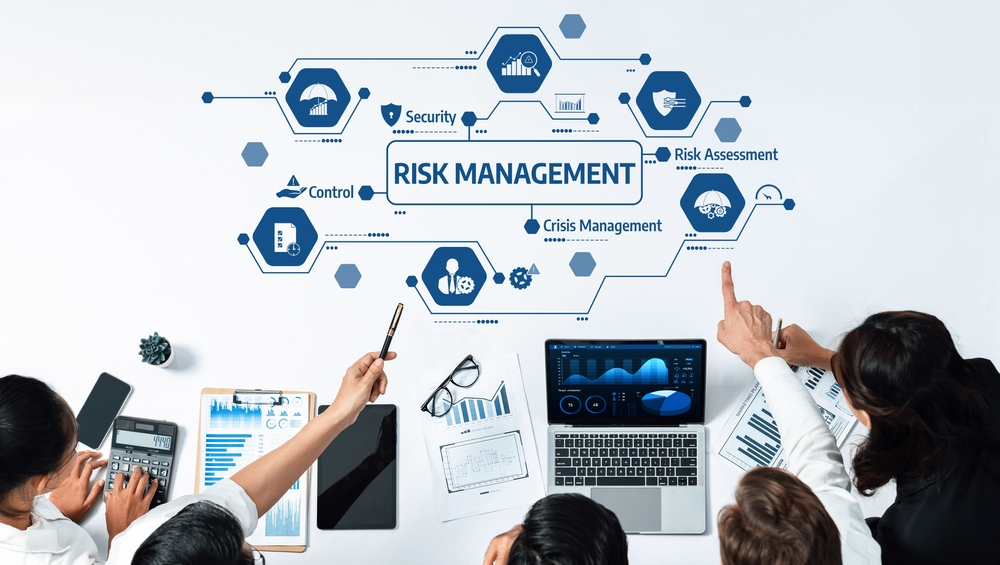
Integration of Risk Management Practices: Beyond the Checklist
For too long, Risk Management for Finance Professionals was seen as a separate compliance checklist. You check the box on internal controls, you check the box on financial reporting, and you’re done. But cyber risk has forced a massive change. Now, risk isn’t just about financial errors; it’s about network integrity, operational continuity, and geopolitical instability. These all feed back into the financial statements. A cyber event is a financial event.
Professor (Dr) Sarat C Das, Director (Research) and Head of Industry Partnership at C3S Business School, champions a total integration. “Effective Cybersecurity in Accounting and Finance must be part of the Enterprise Risk Management (ERM) framework, not a footnote. The cost of downtime, the cost of regulatory fines, and the cost of reputational damage are all quantifiable financial risks that must be budgeted for, modelled, and reported to the Board.”
The goal is to adopt a true risk culture. Every finance decision, from adopting a new cloud provider to launching a new mobile banking app, must start with a risk assessment. This requires finance pros to speak the language of the CISO (Chief Information Security Officer). They need to understand what a Zero Trust Architecture means and why it’s a better Financial Data Protection Strategy than a traditional perimeter defense.
The best practices now require continuous monitoring, not just annual audits. This proactive approach to Risk Management for Finance Professionals is what separates resilient organizations from vulnerable ones. It’s all part of the necessary evolution of Data Security in Financial Services where the focus shifts from prevention to quick detection and recovery. It’s about building a muscle memory for security, making it second nature.
Compliance with Evolving Regulations: The Labyrinth
If the growing threats are the stick, the evolving regulations are the increasingly tangled web we must navigate. I mean, honestly, try keeping up! We have regional behemoths like GDPR in Europe, sector-specific rules like DORA (Digital Operational Resilience Act), and countless national variations (like the various state-level data privacy laws in the US). For anyone managing global accounts, particularly those trained in Accounting and Finance in Spain, this multi-jurisdictional compliance is overwhelming.
“Regulatory complexity is the new normal,” asserts Dr. P. R. Datta, executive chair of Centre for Business & Economic Research (CBER) based in London. “Regulators worldwide are reacting to the sheer volume of breaches, pushing the burden of proof and accountability squarely onto the finance sector. Achieving high-level Data Security in Financial Services is now synonymous with total regulatory compliance.”
The constant pressure to comply with new standards requires finance teams to work hand-in-glove with legal and compliance departments. This is why a simple Diploma in Accounting and Finance is no longer sufficient; students must be taught the legal implications of Cybersecurity in Accounting and Finance. They must know, for example, the strict reporting deadlines for a data breach under GDPR versus other jurisdictions.
Furthermore, compliance isn’t static. As technology evolves (think quantum computing or advanced AI), regulators scramble to update the rules. This relentless change demands that finance organizations, especially those undergoing a significant Digital Transformation in Finance Security, invest heavily in RegTech (Regulatory Technology) solutions to automate monitoring and reporting. The sheer cost of non-compliance—fines, class-action lawsuits, and mandatory reporting costs—is making the investment in robust Financial Data Protection Strategies cheaper than the alternative. The entire faculty at C3S Business School stresses that compliance is a continuous process, not a destination.
Increased Accountability: The Buck Stops Here
In the past, if there was a financial loss due to market conditions, it was often diffused. If there’s a loss due to a catastrophic cyber breach, the accountability is increasingly laser-focused—usually on the C-suite and the Board. This is a terrifying new reality for Risk Management for Finance Professionals.
Boards now demand detailed, easy-to-understand reports on the firm’s cyber posture. They want metrics that translate technical risk into financial terms—Potential Loss Exposure, Cost of Incident Response, and Cyber Insurance Deductibles. This requires finance professionals to step up and own the language of cyber risk.
Prof David M J Graves, who specialises in Private and Public Corporate Governance issues, National and International Financial Crime, and all fraud related offences, is clear on the governance aspect. “The days of the Board pleading ignorance about technology risk are over. In the event of a major breach, accountability will follow the money and the duty of care. Finance professionals are the ones who must accurately model and communicate the financial consequences of inadequate Cybersecurity in Accounting and Finance to the board.”
This increased accountability also extends to the individual level. A finance professional in Accounting and Finance in Spain who ignores security protocol, such as clicking a phishing link, could jeopardize the company’s compliance status and trigger personal disciplinary action. The culture of security must be top-down and universally enforced.
The role of the auditor is also changing. They are no longer just checking if the numbers are right; they are assessing if the systems that produce the numbers are secure. Graduates from the C3S Business School need to understand this new auditing environment, where technical controls are subject to the same scrutiny as cash flows. This new layer of individual and corporate accountability is driving urgent change in how firms approach Digital Transformation in Finance Security.
Adoption of Advanced Security Technologies: The Tech Arms Race
The only way to fight high-tech criminals is with higher-tech defense. The finance sector is engaged in a constant tech arms race, rapidly adopting advanced technologies to ensure Financial Data Protection Strategies are effective. This is the heart of Digital Transformation in Finance Security.
The key technologies include:
- AI and Machine Learning: Used for behavioral analytics (detecting unusual user activity) and automated threat detection that can analyze millions of data points faster than any human team.
- Zero Trust Architecture (ZTA): Moving away from “trust, but verify” to “never trust, always verify.” Every user, device, and connection must be authenticated and authorized, even inside the network perimeter.
- Advanced Cryptography: Moving beyond standard encryption to things like homomorphic encryption, which allows data to be analyzed while still encrypted.
Navin Manaswi, a global AI domain expert, who co-owns AI Company NavSar with offices in Geneva and Bangalore and represents India in world’s AI forums, highlights AI’s role. “AI is the ultimate tool for Cybersecurity in Accounting and Finance. It can analyze transactional data in real-time to detect anomalous transfers indicative of internal fraud or external intrusion, making it an indispensable component of Data Security in Financial Services.”
The finance professional needs to be a smart consumer of these technologies. They don’t need to code the AI, but they need to understand its output, challenge its findings, and ensure it integrates seamlessly with financial systems. For a graduate with a Diploma in Accounting and Finance, being able to talk intelligently about these advanced tools is a huge advantage. This technological adoption, coupled with robust Risk Management for Finance Professionals, is the only way to stay ahead of the curve. Institutions like the C3S Business School are integrating these technology discussions into their curriculum to prepare future leaders.
Cyber Risk Training and Awareness: The Human Firewall
No matter how sophisticated the technology, the human element remains the weakest link. Phishing, social engineering, and accidental data leaks are responsible for the vast majority of successful breaches. Therefore, the single most critical investment a firm can make is in its “human firewall”—comprehensive and continuous Cyber Risk Training and Awareness.
Dr. Maria Fernanda Dugarte, dean and director of Institutional Affairs at C3S Business School in Barcelona, Spain, argues that education must be continuous. “We can teach the best technical strategies, but if a junior accountant clicks a malicious link, the system fails. Effective Risk Management for Finance Professionals begins with cultural awareness. Every employee, from the CEO down to the intern, must understand their personal role in Data Security in Financial Services.”
Training needs to move beyond boring annual slideshows. It must be engaging, gamified, and contextual—using real-world examples of attacks targeting the finance sector. It must specifically address the unique vulnerabilities of Accounting and Finance in Spain, like dealing with multi-lingual phishing attempts or local regulatory compliance.
Professor Jordi Villanova of C3S Business School adds that the training must include how to spot Business Email Compromise (BEC), a major source of financial fraud. “BEC targets finance professionals directly, often trying to trick them into wire transfers. This requires vigilance and a culture of ‘stop and verify’ that training instils.” Making the team aware of their importance in maintaining Financial Data Protection Strategies is non-negotiable. This is the most cost-effective component of Cybersecurity in Accounting and Finance.

Balancing Automation and Security: The Paradox
The push for Digital Transformation in Finance Security is driven by automation. Automated accounting, robotic process automation (RPA), and blockchain-based settlement systems promise efficiency and speed. However, automation introduces a paradox: while it removes human error (a security risk), it concentrates power and risk in a single piece of code. A bug in an automated process can lead to millions in financial loss very quickly, and a hijacked RPA bot can be devastating.
Hiren Raval, chief executive officer of C3S Business School based in Barcelona, Spain, sums up the balancing act. “Automation is inevitable and necessary, but the security review must be the first step, not the last. The speed of the machine means that a security failure is magnified instantly. We must treat every piece of automated code as a high-risk employee. We can’t sacrifice Financial Data Protection Strategies for efficiency.”
This is where the finance professional’s analytical skills become vital. They must scrutinize the security implications of adopting new FinTech tools. For a company focused on Accounting and Finance in Spain, they need to ensure the automated systems comply with specific EU regulations. This careful calibration of speed, efficiency, and Data Security in Financial Services requires a new breed of professional. Students pursuing a Diploma in Accounting and Finance must be taught to evaluate third-party vendor risk and security certifications. This is a core element of modern Risk Management for Finance Professionals. The integration of security into the design phase (Security by Design) is the only effective way to handle the challenges of Digital Transformation in Finance Security.
Conclusion: Securing the Future
The world of Accounting and Finance in Spain and globally has changed forever. The balance sheet is no longer the sole measure of health; the security of the network is equally important. The relentless pace of Digital Transformation in Finance Security means that the lines between the CIO, the CFO, and the CISO have blurred, perhaps permanently.
This isn’t about fear; it’s about preparedness. Every professional, whether they’ve just earned their Diploma in Accounting and Finance or are leading a major firm, must view themselves as a vital part of the security architecture. The future belongs to those who view Risk Management for Finance Professionals not as a barrier, but as the foundation of competitive advantage. Institutions like C3S Business School are providing the necessary education, but the commitment to lifelong learning and vigilance must come from within. Protect the data, protect the firm. It’s that simple.

Written By: C3S Business School
Frequently Asked Questions (FAQ)
Why is Cybersecurity in Accounting and Finance important for accounting and finance professionals?
It’s important because their functions are the primary targets for profit-driven cybercrime. As Professor Eduardo Ortiz, C3S Business School, Barcelona, Spain, notes, “The ledger is the crown jewel. Cybersecurity directly protects the integrity of financial statements, the confidentiality of client data, and the liquidity of the institution. Without it, the entire financial system collapses.” Their role is to translate technical risk into financial risk, which is a core tenet of Risk Management for Finance Professionals.
What are the most common cybersecurity threats in the finance sector?
The most common threats include phishing (targeting employees for access), ransomware (locking critical systems and data), Business Email Compromise (BEC) for fraudulent wire transfers, and insider threats (malicious or accidental). Prof Asraful Khan, a faculty at Arden University, London, says that BEC attacks specifically exploit human trust, making robust Cyber Risk Training and Awareness the best countermeasure in the world of Data Security in Financial Services.
How can accountants help in managing cybersecurity risks?
Accountants play a vital role through controls and budgeting. They design and audit the internal controls over financial reporting (ICFR), ensuring IT systems are part of compliance. They also manage the budget for security technologies and evaluate the financial return on investment for Financial Data Protection Strategies. This is a core part of their expanded mandate under modern Risk Management for Finance Professionals.
What role does risk management play in financial operations?
Risk management is the framework that identifies, assesses, and mitigates threats. In modern finance, it’s holistic. Dr Rajat Baisya, a global management consultant and former dean of IIT Delhi and CEO of Emami Group, points out that operational risk—where cyber threats reside—is now the top concern. “Effective Risk Management for Finance Professionals must treat cyber threats as quantifiable financial liabilities that require immediate mitigation and robust funding.”
Why is regulatory compliance becoming more complex for finance professionals?
It’s complex because regulations are fragmented (e.g., GDPR, CCPA, DORA) and constantly evolving due to accelerated Digital Transformation in Finance Security. Finance professionals must ensure every new system, especially those adopted by a student who completed their Diploma in Accounting and Finance, meets diverse, strict, global data privacy and residency rules, particularly when dealing with cross-border operations like those in Accounting and Finance in Spain.
How do cybersecurity and regulatory compliance intersect in finance?
They are two sides of the same coin. Cybersecurity implements the technical controls (like encryption) that regulatory compliance mandates (like GDPR’s requirement for reasonable Financial Data Protection Strategies). Failure in Cybersecurity in Accounting and Finance automatically results in a failure of regulatory compliance, leading to severe financial and legal penalties.
What are the best practices for managing financial cybersecurity risks?
Best practices include continuous risk monitoring, mandatory Multi-Factor Authentication (MFA), adopting a Zero Trust network model, rigorous third-party vendor security audits, and implementing comprehensive, continuous Cyber Risk Training and Awareness. Pretam Pandey, chief of operations at C3S Business School in Barcelona, insists that vulnerability patching should be automated and instantaneous as part of modern Data Security in Financial Services.
How can technology assist in financial risk management?
Technology, through AI, Machine Learning, and RegTech, automates the detection of anomalies, performs real-time fraud monitoring, and standardizes compliance reporting. Professor Mani Tahriri of C3S Business School states, “The only way to handle the velocity of modern transactions is through automated, intelligent monitoring, which is the heart of effective Digital Transformation in Finance Security.”
What skills do finance professionals need to handle cybersecurity and compliance challenges?
They need a hybrid skillset: traditional Accounting and Finance in Spain knowledge combined with literacy in data analytics, cloud security principles, and regulatory frameworks (like GDPR). Dr Aida Mehrad, head of academics at C3S Business School in Barcelona, Spain, emphasizes that graduates from their C3S Business School need to be “risk communicators,” translating technical threats into clear financial implications for the C-suite.
How can students prepare for careers in cybersecurity and financial risk management?
Students must choose a curriculum that integrates both disciplines. Look for programs, like a specialized Diploma in Accounting and Finance, that offer modules on forensic accounting, cyber auditing, and data governance. Bela Desai, head of business at C3S Business School in Barcelona, advises students to seek internships in IT audit or security consulting roles to gain practical experience with Cybersecurity in Accounting and Finance and Financial Data Protection Strategies.